

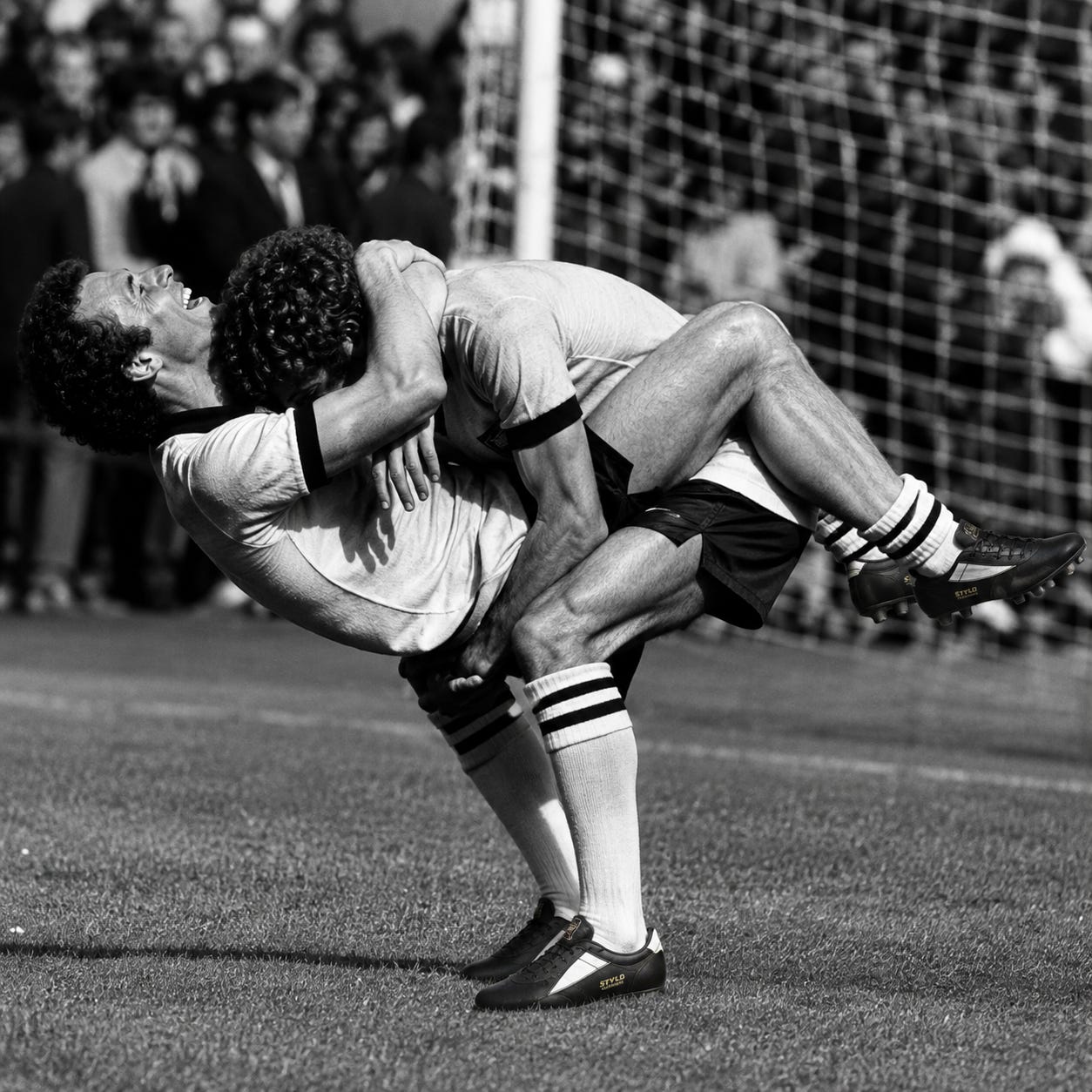
May 1979.
Wembley.
Alan Sunderland slides in at the far post.
The ball hits the net.
Liam Brady turns away.
Pat Rice knows the Cup is going back to Highbury.
On their feet are Stylo Matchmakers.
The goal took a second.
The story took years.
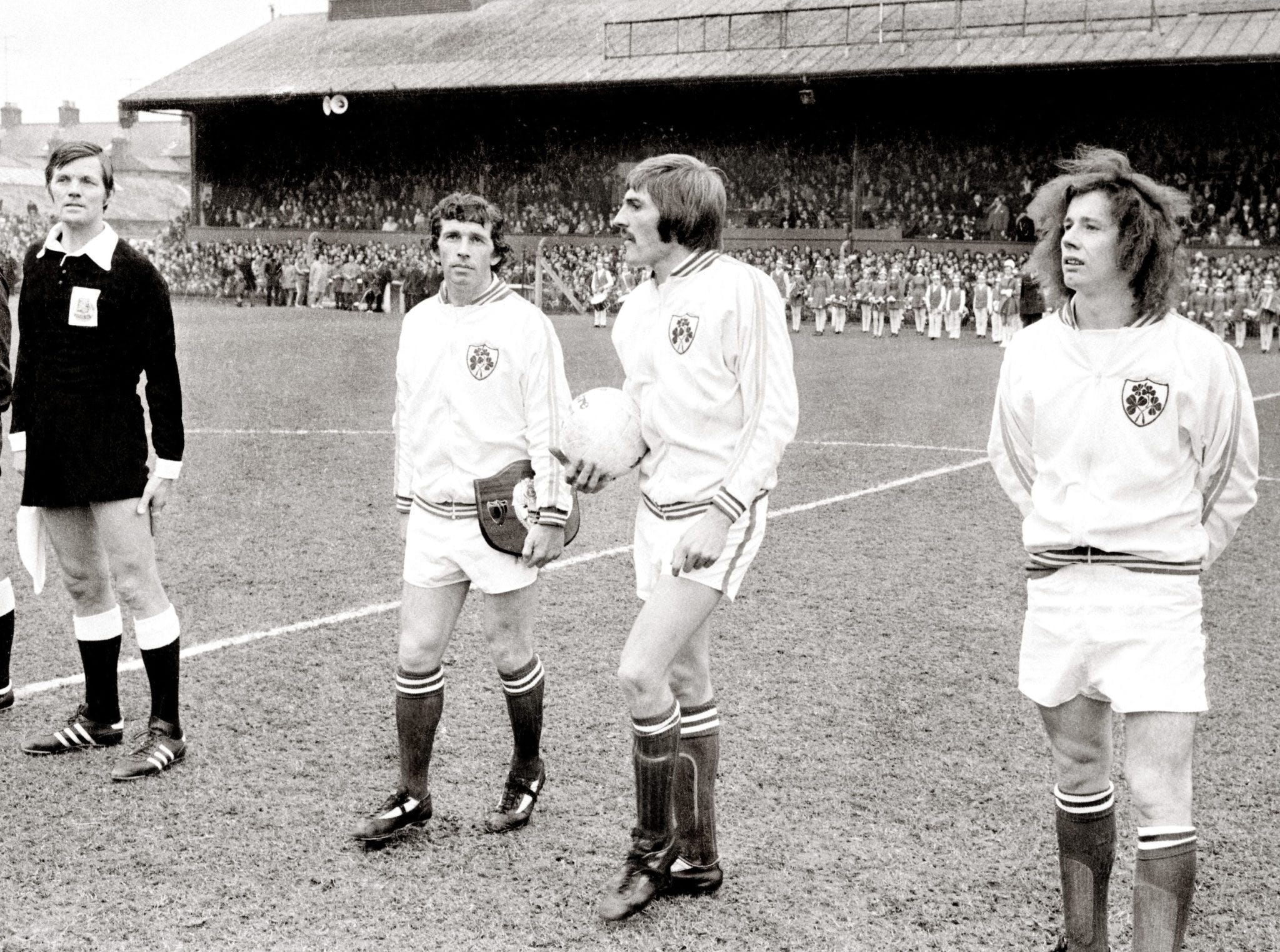
It started in Ireland
Stylo did not arrive at Arsenal through a marketing department.
There was no launch film.
No influencer box.
No bloke in a polo shirt explaining brand activation.
It came through footballers.
Johnny Giles wore Stylo Matchmakers.
So did Steve Heighway.
Two Irish internationals. Two great players.
Giles controlled matches from midfield. Heighway flew down the wing for Liverpool.
They knew players.
They knew boots.
Then came Liam Brady.
Giles played beside him for the Republic of Ireland and saw what Arsenal had before much of England fully understood it.
Brady was different.
He could receive the ball in a crowded midfield and make the pitch look twice as wide.
Giles recommended Stylo and helped connect the brand with him.
Brady wore the boots for Ireland.
Then he took them back to Arsenal.
A proper football introduction.
One generation passing something to the next.
Matchmaking before anyone thought to put it in a job title.
Brady became the star
Stylo signed Brady in 1975.
By the 1978–79 season, he was Arsenal’s finest player.
He wore number seven, but he played wherever the game needed him.
He wanted the ball under pressure.
He carried it through tackles.
He saw runs before defenders saw danger.
That season, Brady was voted PFA Players’ Player of the Year.
The men who had spent the year trying to stop him chose him as the best player in English football.
That is a decent reference.
Stylo ran through the side
Brady was not alone.
Pat Rice wore them.
So did Graham Rix and Alan Sunderland.
The boots were trusted across the side.
Not for photographs.
For Saturdays.
Football before the circus
The pitches were heavy.
The tackles were late.
Winter grounds became mud.
A boot had to fit, grip and last.
That was the job.
No weekly launches.
No endless colours.
No boots dressed like boiled sweets.
Players chose what they trusted.
Then they played.
A season of work
Arsenal finished seventh in the First Division.
The league campaign was respectable.
The FA Cup was different.
They had lost the previous final to Ipswich Town in 1978.
That defeat stayed with them.
Football does not promise a second chance.
Arsenal earned one.
Their run included a five-match battle with Sheffield Wednesday.
Five matches to settle one tie.
They kept playing.
They beat Notts County.
They beat Nottingham Forest.
They beat Southampton in the semi-final.
Then came Manchester United.
Wembley.
12 May 1979.
Arsenal take control
Brian Talbot scored first.
Frank Stapleton made it 2–0 before half-time.
Brady controlled the game.
He found space.
He moved Arsenal forward.
Pat Rice led from the back.
Rix attacked from the left.
Sunderland kept moving.
For most of the afternoon, Arsenal looked safe.
Then Manchester United woke up.
Five minutes
Gordon McQueen scored late.
Then Sammy McIlroy equalised.
Two goals.
Two minutes.
Wembley shook.
United ran back towards halfway believing the match had turned.
Arsenal stood still as the noise rolled around the ground.
Then the ball was moving again.
The move
Brady received it.
He looked left.
Rix was running.
The pass was perfect.
Rix reached it and crossed first time.
Gary Bailey came for the ball and missed it.
For a split second, the far post looked empty.
Then Sunderland appeared.
He stretched.
He scored.
Arsenal 3.
Manchester United 2.
Sunderland ran behind the goal with his arms raised.
Brady followed.
Pat Rice knew.
The Cup was won.
From first pass to final touch
Brady began the move.
Rix supplied the cross.
Sunderland finished it.
Three actions.
One piece of history.
The match became known as the Five-Minute Final.
Sunderland’s celebration became one of Arsenal’s defining images.
Stylo Matchmakers were not added to the story later.
They were already in it.
The story carried on
John Hollins joined Arsenal later in 1979 and wore Stylo too.
The connection continued into another great season, when Arsenal reached the FA Cup final and the European Cup Winners’ Cup final.
The old boot still has a descendant.
The Heirship Seventy Four keeps its simple shape, soft leather and black finish.
The name changed.
The idea did not.
Part of history
Modern brands often try to manufacture heritage.
They borrow old photographs.
They recreate old adverts.
They tell stories after the event.
Stylo Matchmakers do not need to.
The brand was there at Highbury.
It was there at Wembley.
It was there when Brady saw the pass.
When Rix struck the cross.
When Sunderland arrived at the far post.
The ball crossed the line.
Arsenal won the Cup.
Stylo Matchmakers were part of history.